




Dry or Damaged? How to Actually Tell
They look almost identical, they feel almost identical, and they need completely opposite things. Here's how to know which one you're living with.
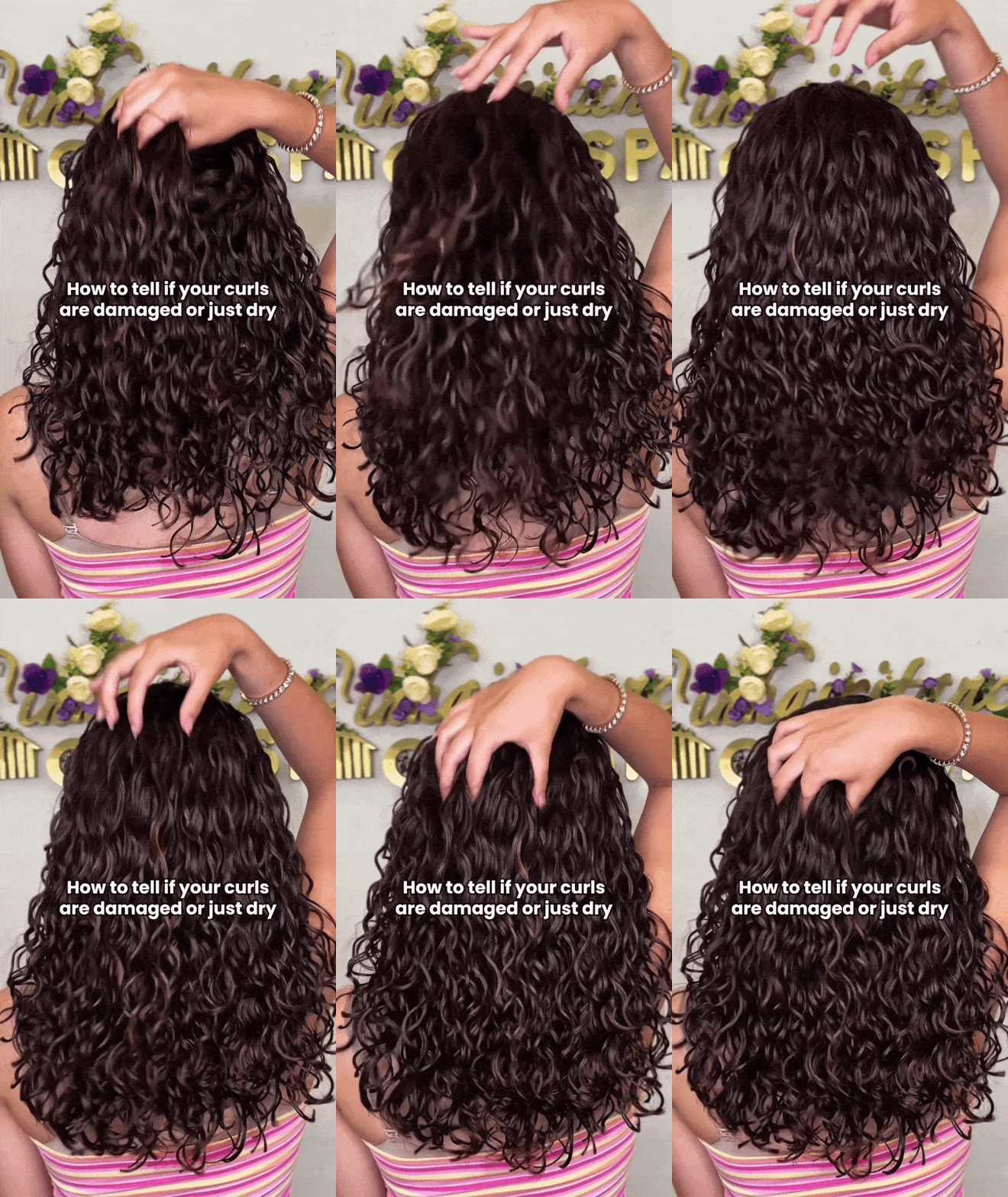
Dry and damaged can look the same from the outside. The difference is in how hair behaves.
You've tried the deep conditioner. You've tried the heavier cream. You've tried the thing your friend swears by, and the thing with four thousand comments under it. Your hair still feels dry, so at some point you stopped asking and just decided: it must be damaged.
Here's the problem with that conclusion. Dry and damaged look almost identical at first glance. They feel similar in your hands. And they need completely different things. Treat damage with more moisture and you'll be disappointed for months. Treat dryness with protein and you can actually make it worse.
So before you buy one more product, let's work out which one you're dealing with.
What Dry Actually Means
Dry hair is a moisture problem. There isn't enough water in the strand, or there is and it isn't staying put. The structure of your hair is intact. It's just thirsty, and the surface shows it: rough to the touch, dull in the light, tangling more than it should.
The important part is that dryness is a state, and states change. Deal with the cause and dry hair comes back.
What Damaged Actually Means
Damage is a structural problem, which is a different thing entirely.
Your hair is roughly 90% keratin, a protein arranged in a specific structure and held together by internal bonds. Bleach, relaxers, high heat and keratin treatments break some of those bonds. The cuticle, the shingled outer layer that's meant to lie flat and protect everything underneath, gets lifted or chipped away.
Once that happens, the strand is physically different. It can't hold onto water the way it used to, because the door that's supposed to close is stuck open. And no amount of moisture rebuilds a structure, in the same way that watering a broken fence won't make it stand back up.
This is the part nobody wants to hear: damage doesn't reverse. It can be filled in, strengthened, made to behave beautifully, and it grows out. But you can't undo it. Which is exactly why it matters that you don't spend six months treating it like dryness.
Three Signs That Tell Them Apart
How It Behaves
Damaged hair goes limp and lifeless. It won't hold a shape. You style it and it falls. It breaks easily when you handle it, and adding more moisture doesn't change any of that, because the thing that holds a curl's shape is its protein structure, and that's the part that's compromised.
Dry hair still holds its shape and its bounce. Push a curl up and it springs. The pattern is there, the body is there. It just feels rough or dull on the surface.
The 10-second version
Wet a small section, stretch one strand gently, then let go. Healthy or simply dry hair stretches a little and springs back. Damaged hair either stretches and stays stretched, or it snaps. If it feels mushy or gummy while wet, almost like it's dissolving, that's damage, and that one needs protein, not moisture.
How Long It's Been True
Damaged hair has felt off for months, whatever you try. Nothing quite works, and the clearest tell is that your roots and your ends feel like they belong to two different heads. That's because they do. Your roots are new growth that nothing has happened to yet. Your ends have lived through everything.
Dry hair showed up recently. There's usually a moment you can point to: a new shampoo, a hot summer, a hotel with hard water, a season change, a stretch where wash days kept sliding. And it clears up once you deal with whatever that was.
If you can name the week it started, you're probably looking at dryness. If you can't remember your hair ever feeling right, look harder at damage.
Where It Shows Up
Damaged hair is localized. It lives in a specific zone: bleached ends, the section where the flat iron always started, the line where a relaxer stopped, the crown that takes the most sun. That one area keeps splitting, keeps breaking, keeps refusing to hold moisture while the rest of your hair is fine.
Dry hair isn't tied to a treated zone like that. It's more even, more overall, less "this patch specifically."
Go and actually look in the mirror for this one. Damage tends to have a geography to it, and once you've seen the map, it's hard to unsee.
If You Landed on Dry, There's a Second Question
Knowing you're dry is only half an answer, because dry has two completely different causes and they call for opposite products.
Get in the shower and watch the first few seconds of your hair getting wet.
Water beads on top and takes a while to soak in
Your cuticle is lying flat and tight. That sounds like a good thing and mostly is, but it also means moisture is struggling to get in. Your conditioner is sitting on the surface instead of sinking past the cuticle. That's a hydration gap.
What helps: lighter formulas, applied to damp rather than soaking hair, plus a little warmth. A shower cap, a warm towel, a few minutes of steam, anything that coaxes the cuticle open enough to let good things in. Heavy butters on hair like this just sit there and make it feel coated.
Dry to soaked almost instantly, then dry again by evening
Absorption isn't your issue at all. Your hair takes water in beautifully and then loses it just as fast. That's a sealing gap.
What helps: richer products, and a sealing step on top so the moisture you just added has something holding it in.
Same symptom, opposite fixes. This is why two people can both say "my hair is so dry" and need completely different shelves.
What to Do About Each One
If it's dryness
Find the cause first, because dryness has one. Hard water. A cleanser that's stripping more than it should. A summer of sun. A run of skipped wash days. Heat styling that crept up on you. Fix the input and you'll fix more than any product will.
Then match your products to the gap you found: lightweight and warm for a hydration gap, rich and sealed for a sealing gap.
If it's damage
Moisture isn't the lever here. Protein is. Damaged hair needs its structure supported, which means a reconstructive treatment that fills the gaps in the cuticle and strengthens the strand from within, rather than another mask that coats the outside and rinses away.
Then you protect what's left. Lower the heat. Stretch the time between chemical services. Handle your hair gently when it's wet and at its most fragile. And be honest with yourself about your ends, because sometimes the kindest and fastest fix for a badly damaged section is a trim, and everything you do afterwards works better without it.
If it's both, which is common
Plenty of people have damaged ends on otherwise dry hair, and it genuinely is both. In that case you alternate: protein to rebuild, moisture to keep it soft, on a rhythm rather than all at once. Do both at the same time and you'll chase your own tail. Do only protein and hair goes brittle. Do only moisture and it goes mushy.
Finding that rhythm is the part worth getting help with, which brings us to the honest limit of an article like this one.
Why a Checklist Can Only Get You This Far
Everything above is real and useful. It's also not the whole calculation, because none of these signs work alone. They stack.
Protein needs, porosity and moisture retention overlap with each other. Your density changes how much product you can carry before it weighs you down. Your strand diameter changes what "lightweight" even means for you. Your history changes how your hair behaves even when the curl pattern is technically still intact underneath. Two heads that both feel dry, with the same curl pattern on paper, can need completely different routines.
An article can't run that math for you. It doesn't know which combination you are.
Let's Get You an Actual Answer
That's exactly why we built the Curl ID. It maps your porosity, elasticity, density, diameter and your goals together, works out whether what you're missing is protein, hydration or sealant, and matches you to the exact routine for it. Not a category. Not a guess. Thirteen years and more than 50,000 curlies went into getting it right.
It takes about three minutes, and you'll know more about your hair at the end of it than most of us pick up in a decade of trial and error.
Take your Curl ID
A few questions about how your hair actually behaves, and you get the routine built for your porosity, diameter and curl type. Free, and it takes about three minutes.
Take the Curl ID Quiz →Knowing which one you're dealing with
is the whole first step.
Follow Inhairitance: Instagram @inhairitance.curlcare · TikTok @inhairitance


